I suppose it was bound to happen sooner or later - and, in the grand scheme of things, this really was a trivial incident - but it just goes to show what can happen when you've been lulled into complacency by easy traveling.
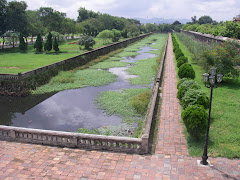
On my last afternoon in Hue, after an all-day rain storm had finally subsided, I needed to get out side and burn off a little pent up energy. Took a long meandering walk through the old quarter and was about to finish it off with a lap around the canals that ring the Citadel when I met "Thue," a local high school English teacher. Turns out he had a couple of days off because his river-side school had flooded and the cleanup was taking some time. At any rate, he had just wrapped up an afternoon of fishing in the canals and was ecstatic at the prospect of actually talking to an American. We chatted for a while before his wife came to pick him up on their motorscooter, at which point he insisted that we go to a nearby cafe to have a beer and talk. His wife had to do some shopping and would meet us at the cafe soon. Fine, I thought. I've got a couple of hours to kill and this is what travel is all about, right? Meeting the locals. So off we go.
He takes me to a quiet little restaurant a few blocks away, we chat and he orders a couple of beers. Cool, whatever. Then more beers. And a couple more. And another. I've got to be honest, this guy was a total lightweight. After an hour of matching him drink for drink, I knew he wasn't any sort of threat - at this rate, he'd be flat on on the floor long before me. Anyway, his wife eventually shows up - a very friendly woman, a little younger than me - and suddenly they begin ordering food. That's cool. I wasn't hungry but I was happy to keep them company while they ate.
Long story short, wife leaves - she has to get back to their two little kids at home - and the check shows up. Guess who suddenly doesn't have any money to pay the wildly inflated bill? Yep, my new buddy. I avoid making a big scene, knowing how seriously Asians take a loss of "face," and cover the bill. Thue promises over and over that he'll pay me back at his house. Yeah, right.
At this point, trying to maintain my composure (the bill was literally 5 times what it should have been - the staff must have assumed the white guy was paying and let me have it), we wandered to his house which was on my way home anyway. I'm pissed, he's dodging my requests for his 2/3 of the bill for a meal and drinks I never wanted, I'm getting more pissed. Suddenly my head is flooded with Africa flashbacks - where you really are getting screwed on a daily basis - and I can feel my temper rising. By the time we get to his place I'm equal parts fired up and completely over the incident. But I'm not leaving without putting up a diplomatic fight. So, I take his wife aside and present her with the bill from the restaurant and she suddenly feels bad (maybe her husband does this kind of thing on a regular basis?). She disappears next door and comes back with a few dollars. Not nearly enough to smooth things over but realizing it's all I'm getting, I decline a ride home and start walking back to the hotel.
Disecting the situation on my walk home, I instantly recognized that it wasn't the money that bothered me - it came to a lousy $20 (which, for perspective's sake, is at least two night's lodging). No, it was the fact that I was taken advantage of because I was a foreigner - first by the restaurant when they overcharged me, and second by Thue when he didn't argue against the outrageous tab, nor even consider paying part of it....after asking ME to join HIM.
But, of course, what it really came down to is that I allowed myself to be taken advantage of. I'm normally so much better at spotting this kind of shit and not allowing myself to fall into the trap. Two years of African-style boot camp may have made me suspicious of everyone's intentions but it also protected me from getting jerked around. And now look at me - I've gone completely soft! Trusting people.....ha.
By the time I reached the little alley leading to my place - after being cheerfully greeted by the woman who owns the coffee shop/travel agency across the way and the guy who runs the internet cafe next door - I was calming down a bit and putting it all into perspective. And after chatting with the front desk girls for a few minutes, I had mentally written off the twenty bucks and begun putting the incident behind me.
Whatever the restaurant staff did, it obviously wasn't personal. To them, I'm just another wealthy foreigner who can afford to part with a few dollars. Thue...well, I can't really explain his behavior or motives, other than he just saw me the same way - a white skinned, English-speaking meal ticket. Hmmm....not exactly the image I had hoped to portray. But, when all was said and done, it was a relatively inexpensive reminder that you DO have to stay on your toes. My image of Hue or the Vietnamese people has not been tarnished....but the bullshit detector has been activated.
About Me

- Evan
- A good traveler has no fixed plans, and is not intent on arriving - Lao Tzu
Tuesday, October 14, 2008

Sunday, October 12, 2008
The Tour
 With more than a little trepidation, I did something that I've always sworn off in the past (with one regretable exception in China): I signed up for an organized "tour." I'll be blunt, I f***ing hate organized tours - and yes, I am completely aware of the irony. For the past 14 years or so, I've made my living leading organized tours down rivers. That's probably part of the problem. I just can't handle not being in the driver's seat, so to speak. And I hate being just another tourist, herded from one sight to the next. I repeat: I am completely aware of the irony. And it hurts.
That being said, I decided to bite the bullet and sign up for a tour of the DMZ (demilitarized zone) - a swath of land that stretches from the Vietnamese coast to the border with Laos. The DMZ is about a hundred kilometers long and ten kilometers wide, centered on the Ben Hai river. From 1954 until the Communist victory in 1975, it was the official demarcation line between the Republic of Vietnam (South) and the Democratic Republic of Vietnam (North) and, according to international agreement, the area was supposed to have been, well, demilitarized. Of course it wasn't, and the areas just south of the DMZ saw some of heaviest fighting of the war while the stretch just north of the DMZ suffered some of the heaviest shelling and bombing. Today, the former DMZ has been reclaimed by villages, towns, and farms, although UXE (exploded ordnance) is still a serious problem. I saw a few signs (the classic skull and crossbones) warning about leftover explosives. Billboards on the side of the road use cartoon characters to warn the public - primarily children - about the danger of picking up old landmines and bombs. Sad.
At any rate, while I thought I might be able to rent a motorbike and make my own way around the DMZ, the distances, rainy weather, and difficulty even finding many of the sites, convinced me to throw in the towel and submit myself to a tour. At $15 dollars for a full day, I figured I could eat the financial loss if the tour was crap. The lost 12 hours of my life would be harder to justify, but I eventually gave in.
The tour itself was typical: the DMZ tour mafia ran the show and we were shuttled from one "family" owned restaurant to another. The bus itself was alright, minus the blaring stereo, lack of rear shocks, and the a/c unit directly overhead that dripped like an incontinent old man for the duration of the trip. That just became funny after a while. Sort of. I was also surprised to discover that out of a group of maybe 25 foreigners, I was the only American. Lots of Aussies, Germans, a few Israelis, a funny Brit and his overweight Austrian girlfriend (who nearly had a panic attack later that day), and a chain-smoking Japanese kid, but no other Americans. I don't why I expected to see more Americans in Vietnam, but they've proven to be few and far between. Maybe that's a good thing (honestly, the one who stands out- a guy I met in Hanoi - was an overbearing, obnoxiously naive prick).
We managed to squeeze in quite a few sights during the day, considering the distances covered from Hue. Along Highway 9, which parallels the DMZ we stopped at an old Marine Corps. observation post called the "Rockpile." Set on top of a seriously steep limestone peak, we just looked up from the bottom - even Marines didn't climb this one, they were ferried by helicopter. A quick stop at a section of the Ho Chi Minh trail - which today is the fully paved Ho Chi Minh Highway (really). And finally a visit to the Khe Sanh combat base. The site of the bloodiest battle of the Vietnam war is now a lush hilltop covered in small coffee farms. All that really remains is the old airstrip and an expectedly biased museum display. I'm not really sure what I expected to find at Khe Sanh, but I wasn't prepared for the completely ordinary, overwhelmingly peaceful surroundings. I suppose, in the grand scheme of things, the Vietnam War was just a blip in the history of this country. The tropical landscape and even the Vietnamese people, in the form of the younger generations, are quickly reclaiming all that was destroyed by the war.
The second half of the day was spent touring Highway 1 which runs parallel to the coast line. We passed directly through the old DMZ as we crossed the flatlands that surround the Ben Hai - still sort of a no man's land of rice paddies and tidal flats. The final destination of the trip was the village of Vinh Moc, and more precisely, its tunnels. Vinh Moc was a small fishing village that just happened to find itself on the northern edge of the DMZ in 1954. For that, it suffered repeated bombing and shelling from American bombers and ships off the coast. To survive, the entire village went underground - way underground. At any given time 300 villagers (and North Vietnamese fighters) were living up to 60 feet below ground in a labyrinth of tunnels. There were rooms for living, hospitals, guard posts, meeting halls, bomb shelters, and even water wells all below the surface. Secret exits opened up into the demolished village above and directly on to the beach so that villagers could come out at night to work their rice paddies and care for their animals. Pretty amazing and most of it was open to walk (stoop) through - this is where the Austrian girl had here mini-freak out. Her boyfriend's attempt at humor to talk her down had most of us rolling, although she may not have appreciated it. Oh well.
After the tunnels we began the long drive back to Hue - 4 hours or so - and we returned after dark and in the thick of a new round of rain. My plans are to head south to Hoi An in a day - of course, the owner of the internet cafe that I've befriended mentioned that Hoi An is flooding a bit. Hmm...always an adventure.
Saturday, October 11, 2008
A Couple of Days in Hue
 Ok, so as I sit down to write this there is a pretty serious screaming match going on in the lobby of my guesthouse - I'm guessing between the owner and some family members, but I don't really know. Man, high-pitched, higher-decibel Vietnamese is grating on the ears. The German kid sitting at the computer next to me is chuckling to himself and stealing glances at the verbal warfare going on behind me. And it really was such a relaxing day.....
I've spent the last couple of days exploring the city of Hue on foot and by bicycle and I've got to say that (current screaming match notwithstanding) this is a place where, in another life, I could see myself settling down and staying for a while. The heart of modern-day Hue (pronounced "way," by the way) is the old city which is enclosed within the walls - 2 meters thick and 10km around - of the old citadel. "Old city," however, is more or less a misnomer since a hundred years of combined French, American, and Vietnamese aggression had destroyed most of the city by 1975, when the Communists permanently rolled into town. But Hue has been rebuilt, slowly but surely (including inevitable sprawl) - a process that has been financially subsidized due to its UNESCO rating as a world heritage site.
As soon as you ride across the bridge spanning the Perfume River and enter the Citadel via one of a dozen gates, everything slows down a notch. Although a good chunk of the population lives within the Citadel, it feels as though you've left the city for the country with its quiet lanes, small markets, ponds, canals, parks, gardens, and family farms. I don't want to make the Citadel sound like a paradise, because it's not. There are still pockets of poverty, visible damage remains from the war that ended 35 years ago, and God only knows what long-time residents of the city have been through. But, I'm quickly learning that the Vietnamese don't dwell much on the past and Hue is a testament to that attitude. A beautiful city with (once again) some of the friendliest people I've ever met. On a leisurely morning bike ride around the Citadel, I stopped counting how many people waved and said hello to me. At a construction site, no less than a dozen workers stopped what they were doing and asked me to take their photos (side note: after looking at the pictures again I noticed a few lewd gestures that sort of transcend the language barrier, if you know what I mean). I passed dozens of young boys playing marbles in the dirt on the side of the road and when I asked to watch, they gave me my own handful to keep. That's the kind of stuff that I'm growing to love about this country.
The highlight of Hue - and the reason for its UNESCO attention - is the "Imperial Enclosure." Essentially a citadel within a citadel (guide book's words, not mine), it was home to generations of Vietnamese emperors and structurally based on the Forbidden City in Bejiing. Temples, palaces, living quarters for the hundreds of eunuchs and concubines who served, and serviced, the Emperor. Man, what a life. In all honesty, there's not a whole lot left - the French destroyed most of it, and the Americans and Viet Cong finished off the rest. But a few temples and palaces have been restored and reconstruction is ongoing. I spent the better part of a morning just wandering around the complex and was amazed by the history, and destruction, associated with the place.
I've got a couple more days in Hue before moving on and there's still plenty to see and do. Should have a good story to share after my next adventure - Daniel, if you're reading this, I've signed up for another "DAY" like the one we had in Bejiing. Wish me luck.
Friday, October 10, 2008
Crossing the DMZ: Hue
 Rolling out of Hanoi's Ga Hang Co train station, I found myself alone in my four-bunk "soft-sleeper" compartment. Guessing I must have settled into the wrong berth, I wandered up and down the coach looking for someone official to talk to. A quick check with a uniformed guy half-heartedly cleaning the car's bathroom confirmed that I was in the right place. Based on previous developing-world-train-adventures (think India) I just assumed I'd be sharing second hand cigarette smoke and fighting for elbow room with drunk travel mates, all the while dodging flying hot noodle soup...at least for the first few hours. Not this time around, apparently. For the next 13 hours, I shared the entire train car with a grand total of three other travelers and one persistent s.o.b. of a mouse. Perfect.
Arriving in Hue around 10:00 am, it was easy enough finding a place to stay for the several days. The hordes of rickshaw, motorbike, and taxi touts descended like starving vultures on anyone exiting the station. Before I knew it - and against my better judgement - I had given into one of them and was zipping down back alleys on the back of his bike looking for a recommended hotel. To his credit, my driver took me straight away to the Phong Nha Hotel without even a suggestion that he be my permanent tour guide for the duration of my visit. Cool.
At first glance, Hue looked like a nice place - infinitely calmer than Hanoi - but the souvenir hawkers and wanna-be guides are definitely a little more aggressive than their northern counterparts. Feeling a little groggy from lack of sleep (thanks, mouse) I sacked out for a few hours and woke up with just enough daylight left for a quick run down to Hue's Citadel, the part of town within the walls of the old imperial city built in 1804. In addition to being the site of one of the biggest, hardest fought battles of the Vietnam (ie. American) War, Hue also has a reputation for its architecture - the Citadel (or what remains) is a Unesco-designated World Heritage Site. At any rate, I wandered around just enough to get my bearings and find a cold beer. Easy enough on both points. Hue is dominated by the Perfume River and the Citadel's Flag Tower is easily seen from almost anywhere. Barring that, the super-plush, five-star Imperial Hotel makes a decent enough landmark. Hue is also most definitely a tourist town - cafes, bars, hotels, curio stands (at least in this neighborhood).
On my very short walk, I also got a sense of Hue's darker history - old, brick walls around the Citadel still pockmarked with bullet holes, kids playing on aging American tanks and artillery pieces (a few sneaking off to smoke cigarettes inside a battered armored personnel carrier), street vendors selling old gas masks, canteens, combat boots, deactivated (I hope) mines, and a couple rusted-out Colt .45 pistols.
Lots of history in Hue - I'll start sorting it all out first thing in the morning.
Monday, October 6, 2008
Vietnam Road Rules
 One of the very first things you realize when attempting to negotiate the highways and byways of Vietnam is that, in order to avoid becoming just another piece of road kill, you've got to behave like the locals. That, of course, means chucking every "westernized" notion of proper roadway behavior that you've ever learned and diving headlong, and confidently, into the motorized fray. While traffic rules apparently exist (why else would they have traffic cops loitering on street corners?) they seem to be rarely, if ever, enforced. So where does that leave the hapless visitor? A good start would be dropping your common sense at the curb and adopting the local customs:
(1) Realize that NO ONE will observe the sanctity of the crosswalk, not even the little old ladies pedaling their mobile flower stalls. With traffic racing around you in not two, but possibly three or four directions, it would be suicidal to try and outrun passing vehicles. You must walk as slow as possible - I mean glacially slow - through the crosswalks. Oh no, the cars and motorbikes will not stop for you, in fact, they'll probably speed up. But they will SEE you and, if at all possible, avoid running you down. By moving one half-step at a time, you (hopefully) give them ample time to adjust their course. I admit, it's a little scary to stand in the midst of a sea of speeding steel, screaming engines, and blaring horns - and you will feel a little silly doing your best snail impersonation in the middle of Ho Chi Minh Blvd. - but to sprint is only asking for total destruction.
(2) Don't be ashamed to use other vehicles (cars, scooters, bikes, rickshaws, or strollers) or pedestrians (especially the elderly or women with infant children) as a buffer between yourself and oncoming traffic. Yeah, your sense of manliness may take a beating, but it's nothing compared to the beating you'd take by a runaway motorbike loaded down with 500 lbs. of poultry or 15 vertical feet of wicker fishtraps. Seriously, suck up your ego and hide behind the old people.
(3) When riding a bike or motorscooter of your own, just assume that everyone around you is a MUCH better driver than you are. Trust me, they are. For good measure, why not assume that they are actively trying to avoid plowing into you from behind. They may not be - in fact they may not even notice you as they drive and (a) try to light their cigarette (b) chat with their passengers (c) text message (d) attempt to restrain whatever sort of animal(s) they are taking to market, or (e) hustle for tourists - but ignorance is indeed bliss, even if it is intentional ignorance. Just proceed at your own pace and hope for the best.
(4) USE YOUR HORN....LOUDLY and OFTEN. I've never understood the insanely incessant use of horns on the streets of the developing world. It always seemed to me that drivers were just attempting to auditorially torture everyone within earshot for some sick, twisted, and unexplained reason. However, after a stint on those same roads, in my own vehicle, this behavior has begun to make sense. Perfect sense, in fact. Assuming that traffic laws mean nothing- including rules for passing, lane changes, turning, etc - how do you signal your presence and intended behavior to your fellow drivers? You honk like a friggin mad man. Honking lets everyone know you're there and coming on fast. Another benefit of the horns is that, after a while, you learn to tell exactly what sort of vehicle is coming up on you - allowing you to plan your response accordingly: booming, low pitched horn is a city bus, dump truck, or army tank - get the hell out of the way; mid-range pitch, often gussied up with a dial-tone like song snippet is probably an SUV and deserves your respect - move off to the side of road, but don't slow down; high-pitched horn that sounds like a bleating sheep, that's just another scooter - fight off his advances and hold your ground; and finally, that little bike bell you hear tinkling behind you, probably just an old man being a smart ass - swerve in front of him and show him who's boss.
(5) Finally, when all else fails, just play the clueless foreigner card. So far, I've found that most traffic-related difficulties and potential confrontations can be easily dealt with by pulling out my laminated Hanoi city map, staring at it intently for a few moments, staring up at the nearby steet signs (printed in Vietnamese, of course), staring again at the map, flipping the map around, and repeating the act...er, I mean process. Works like a charm.
***Although I certainly don't subscribe this little nugget of sage advice, I feel it should be included to reflect a local's take. This is from Ahn, the man I rented my motorbike from:
Ahn: "And remember, sometime chicken and dog cross the road and get in way. If that happen, just hit them, ok. Don't stop. Keep going."
Me: "Are you serious? Just keep going?"
Ahn: "Oh yeah, there are many, many chickens in the countryside and they will not miss one."
Me: "But what if I hit a dog?"
With a completely straight face and deadpan tone, Ahn replies "The family probably want new puppy anyway."
R&R in Hanoi

Ok, I suppose you can't really claim to be taking R&R when you're already living in an R&R world. Be that as it may, I'm running errands and enjoying my last day or two in the capitol city before heading south on the next leg of my journey: faxing absentee-ballot paperwork back to the States - planning (hoping!) to vote at the American consulate in Saigon; getting some serious Dong....at the bank (whew, that joke never gets old); and arranging a ticket on the "Reunification Express," the train that runs from Hanoi to Saigon and points in-between.
The last afternoon on my trusty motorbike was spent getting completely lost in the maze of old streets that make up downtown Hanoi - and to be quite honest, I'm still not sure how I managed to find my way back home at the end of the day. The one site on my list that I had missed on my first Hanoi go-around was the Vietnam Museum of Ethnology. It's a little out of the way and off the beaten path, but according to reports shouldn't be missed, so off I went. Eventually found my way there and was pleasantly surprised by the museum (I think the fact it is "guided" by Paris' Musee de l'Homme helps alot). Great exhibits about the majority of Vietnam's ethnic groups, including the montagnard (hill tribe) people I had come in contact with during my motorbike trip. The grounds surrounding the museum were covered in replicas of traditional tribal homes and, bizarrely, seemed to be the hottest location in town for wedding photos. Couples, done up in their finest wedding duds (for some, straight out of a late 1970's highschool prom) were wandering the grounds with their gear-laden photographers. Wistful (lustfull?) gazes between couples as they posed in front of a thatched-roofed H'mong home seemed to be the most popular photo op. The second most popular location - for all museum visitors - was a replica funeral hut surrounded on all sides by carved wooden figures....about to get some serious "conjugal action." As you might expect, all the guys wanted their photos taken next to the fertility statues, all the girls feigned shock and embarrassment. Typical. Yeah, I got a photo or two.
The motorbike was due back at the shop first thing this morning. Slightly delayed by a lost set of keys - by the hostel security guard, not me - I pulled in to "OffRoad Vietnam" just a few minutes late. The owner, a guy named Ahn, came out to meet me with a cup of tea and was anxious to hear about my trip. Turns out the same storm that had caused me so many problems in Son La had actually (literally) sunk one his motorcycles on a guided trip he was leading. He was in the process of disassembling and drying out the bike in his shop when I arrived. I guess, in comparison, the damageI did to my bike was pretty mellow and he let me off with a $4 bill for the stolen mirror. Didn't even charge me for the electric starter I had fried by attempting to cross a flooded road. A very nice guy - I'd recommend his outfit to anyone. And with that, my motorbike tour of northern Vietnam officially came to an end. Having the bike for two weeks was amazing and I can't imagine having seen the country any other way. That being said, returning the bike safely to Ahn was a like finally kicking an overweight monkey off my back. Throughout the trip, I had been nagged by concerns of potentional theft or annihilation by water buffalo (and the resulting financial hit). It was a bittersweet parting as I gave one final, misty-eyed, wave to my trusty steed.
The last afternoon on my trusty motorbike was spent getting completely lost in the maze of old streets that make up downtown Hanoi - and to be quite honest, I'm still not sure how I managed to find my way back home at the end of the day. The one site on my list that I had missed on my first Hanoi go-around was the Vietnam Museum of Ethnology. It's a little out of the way and off the beaten path, but according to reports shouldn't be missed, so off I went. Eventually found my way there and was pleasantly surprised by the museum (I think the fact it is "guided" by Paris' Musee de l'Homme helps alot). Great exhibits about the majority of Vietnam's ethnic groups, including the montagnard (hill tribe) people I had come in contact with during my motorbike trip. The grounds surrounding the museum were covered in replicas of traditional tribal homes and, bizarrely, seemed to be the hottest location in town for wedding photos. Couples, done up in their finest wedding duds (for some, straight out of a late 1970's highschool prom) were wandering the grounds with their gear-laden photographers. Wistful (lustfull?) gazes between couples as they posed in front of a thatched-roofed H'mong home seemed to be the most popular photo op. The second most popular location - for all museum visitors - was a replica funeral hut surrounded on all sides by carved wooden figures....about to get some serious "conjugal action." As you might expect, all the guys wanted their photos taken next to the fertility statues, all the girls feigned shock and embarrassment. Typical. Yeah, I got a photo or two.
The motorbike was due back at the shop first thing this morning. Slightly delayed by a lost set of keys - by the hostel security guard, not me - I pulled in to "OffRoad Vietnam" just a few minutes late. The owner, a guy named Ahn, came out to meet me with a cup of tea and was anxious to hear about my trip. Turns out the same storm that had caused me so many problems in Son La had actually (literally) sunk one his motorcycles on a guided trip he was leading. He was in the process of disassembling and drying out the bike in his shop when I arrived. I guess, in comparison, the damageI did to my bike was pretty mellow and he let me off with a $4 bill for the stolen mirror. Didn't even charge me for the electric starter I had fried by attempting to cross a flooded road. A very nice guy - I'd recommend his outfit to anyone. And with that, my motorbike tour of northern Vietnam officially came to an end. Having the bike for two weeks was amazing and I can't imagine having seen the country any other way. That being said, returning the bike safely to Ahn was a like finally kicking an overweight monkey off my back. Throughout the trip, I had been nagged by concerns of potentional theft or annihilation by water buffalo (and the resulting financial hit). It was a bittersweet parting as I gave one final, misty-eyed, wave to my trusty steed.
Sunday, October 5, 2008
Post-Sapa Blues.....
 Ahhh....the post-Sapa let down. I had been congratulated by a German kid for (admittedly ignorantly) saving Sapa for the end of my motorbike journey. "Nuting elze vood cumpare after zee vizit to Zapa," he said. He was only partially right, but I was a little disheartened the first time I had to mime my way through another attempted meal order at a dusty little roadside food stand. The days of Parisian-style chocolate-coconut pastries are over for now, so it seems.
Taking advantage of another gorgeous day's weather, I cruised the 26km straight down hill to the river-side town of Lao Cai. Although the Chinese border crossing was only a couple kilometers north of town, I decided to skip the sightseeing, and crossed the Red River before heading straight up into the hills again. This time the target was the mountain town of Bac Ha. A full two thousand feet lower - and accordingly warmer - than Sapa, Bac Ha was surrounded by impressive mountains of its own. Terraced rice fields and streams finished off the scenery, but it really was a toned down version of Sapa. Bac Ha's big draw is a Sunday market which, apparently, pulls in hundreds of local hill tribe women every weekend - and dozens of loaded tour buses from Hanoi and Sapa. Watching the weather carefully and noticing another round of storms in the forecast, I decided to visit Bac Ha on Friday and Saturday, leaving town before both the market and the cruddy weather. Not really much to see or do without the market in action, but I enjoyed a mellow day of walking and reading. Knowing I had a long, very rough stretch of road ahead of me - I got an early start on Saturday morning and dodged a steady stream of incoming tour buses for my efforts.
The next stretch of road, from Bac Ha to an city called Yen Bai, was some of the very worst that I had seen. Chewed up tarmac - where it existed - mixed with rutted and potholed dirt roads for nearly 120 miles. Toss in the heavy traffic utilizing the only "main" road in the province, and not only was I forced to go painstakingly slow, all the while fearing a busted shock-absorber, slipped disk, or ruptured spleen, but I was choking on a non-stop curtain of dust. Pulling over for the occassional break, I'd have to slap the layers of road dirt off my pants and shirt. After stopping for lunch, I glanced in my one remaining rearview mirror and was met with a clown-face of sweat and dust. I can only imagine what the locals thought. While I tried my very best to maintain a Zen-like state of understanding and sympathy for the inherent difficulties faced by the Vietnamese road-maintenance crews, there were a couple of times that I nearly lost it. Nothing that a few profanity-laced rants (directed at the water buffalo, of course) couldn't help. Sort of.
I FINALLY arrived in Yen Bai after nearly 7 hours on the road (120 miles divided by 7 hours....uh huh). Like Lao Cai, Yen Bai sits on the Red River, but most importantly, it marks the transition between the mountains and the flat lands that stretch all the way to Hanoi and beyond. The roads were paved, the terrain mellow, and I started cooking. I got another couple of hours of riding in before the impending darkness started freaking me out a bit. The last place I wanted to find myself after dark was the middle of the Vietnamese countryside - especially after watching an elderly lady earlier in the day bash the living shit out of yet another roadside snake. So, without a clue as to where I was, I started looking for the Vietnamese words "nha khach" (guesthouse) on buildings as I whizzed by. When I found one, it was a quick shower, bottle of beer, and lights out.
The storm that I had been worried about hit with a vengeance last night as I slept. At this point - out of the mountains and back on paved roads - it didn't concern me too much, and the last 70 km into Hanoi this morning were a relative snap. I've checked back into my hostel for the next couple of days and, since I've still got an afternoon and half a tank of gas left on my motorbike rental, I'm heading out the door for a little exploring further afield. Not exactly sure where I'm heading next, but I do know it's south and by train.
Thursday, October 2, 2008
On Being a Round-Eye in Vietnam

One thing that I've quickly come to realize is that solo travel through Vietnam is only "solo" if you are determined to make it that way. Granted, I've only been in the country for a couple of weeks, and in that time I've only seen one small corner of it, but I can't say enough about the Vietnamese people that I've met so far. Before I left, a couple of friends wondered aloud how the Vietnamese would treat an American traveler - either because of the war we fought here or the dangerously moronic foreign "policies" that have poured out the White House in recent years. Having visited Vietnam a couple of years ago, I got a taste of the hospitality that was offered all visitors to Vietnam, Americans included. My experiences over the past two weeks have only validated those impressions.
In every city, town, or village I've visited, in every hotel or guesthouse that I've spent a night in, in every little restaurant or roadside food stall that I've stopped in at, and in every typhoon-related flooding event I've found myself knee-deep in, I've found the some of the kindest and most helpful people I've ever met, at home or abroad. Whether it was the guy who immediately offered to truck my bike across a flooded road in Son La, the teenager who helped me get my bike started again after I killed the electric starter (the water was apparently deeper than it looked), the young business man from Hanoi named Than, who, while visiting his girlfriend in Son La, saw me eating dinner alone and invited me to their table - they shared their food, MANY shots of rice wine, and multiple toasts to VIETNAM! AMERICA! FRIENDS! Then there was Mr. Voo, an older H'mong man in Sapa who helped me navigate the electronics store in search of an electricity converter. Only at the end of our search did he tell me that he actually lives with his son in Las Vegas for half of the year - the guy actually knows where Kanab is! And Ms. Vu (no relation), the mountain guide who, during a down day, "adopted me" for a couple of hours and patiently answered as many questions that I could come up with.
Maybe it should be attributed to the "mountain-people" phenomena that I've come across before. Whether I've been village hopping in the Himalaya, living in a Colorado coal-mining town, or naively taking on the "Tonkinese Alps" during a typhoon, I've found mountain people to to be some of the most honest, hospitable, helpful, and funloving people that I've ever met. Often times their lives are amazingly difficult and their futures uncertain but they're never short on kindness towards strangers.
In Sapa, even the souvenir stand owners and motorcycle hustlers, hotel touts and tour guides ply their goods and services politely. None of the hardball stuff typically found in the bigger cities. A smiling "no thanks" on my part generally get a smile and an "ok" in return. The local women who wander the streets selling handicrafts are just as likely to sit down and talk with you about their lives, and ask about yours, as they are to push their jewelry and embroidery.
Of course, I'm not naive enough to believe that there are no bad dudes in Vietnam, or that I won't occassionally be taken advantage of (my newly missing motorbike mirror is a testament to that) and I suppose this posting will be supremely ironic if I get mugged, robbed, or worse somewhere down the road, but at this point, so far so good.
In every city, town, or village I've visited, in every hotel or guesthouse that I've spent a night in, in every little restaurant or roadside food stall that I've stopped in at, and in every typhoon-related flooding event I've found myself knee-deep in, I've found the some of the kindest and most helpful people I've ever met, at home or abroad. Whether it was the guy who immediately offered to truck my bike across a flooded road in Son La, the teenager who helped me get my bike started again after I killed the electric starter (the water was apparently deeper than it looked), the young business man from Hanoi named Than, who, while visiting his girlfriend in Son La, saw me eating dinner alone and invited me to their table - they shared their food, MANY shots of rice wine, and multiple toasts to VIETNAM! AMERICA! FRIENDS! Then there was Mr. Voo, an older H'mong man in Sapa who helped me navigate the electronics store in search of an electricity converter. Only at the end of our search did he tell me that he actually lives with his son in Las Vegas for half of the year - the guy actually knows where Kanab is! And Ms. Vu (no relation), the mountain guide who, during a down day, "adopted me" for a couple of hours and patiently answered as many questions that I could come up with.
Maybe it should be attributed to the "mountain-people" phenomena that I've come across before. Whether I've been village hopping in the Himalaya, living in a Colorado coal-mining town, or naively taking on the "Tonkinese Alps" during a typhoon, I've found mountain people to to be some of the most honest, hospitable, helpful, and funloving people that I've ever met. Often times their lives are amazingly difficult and their futures uncertain but they're never short on kindness towards strangers.
In Sapa, even the souvenir stand owners and motorcycle hustlers, hotel touts and tour guides ply their goods and services politely. None of the hardball stuff typically found in the bigger cities. A smiling "no thanks" on my part generally get a smile and an "ok" in return. The local women who wander the streets selling handicrafts are just as likely to sit down and talk with you about their lives, and ask about yours, as they are to push their jewelry and embroidery.
Of course, I'm not naive enough to believe that there are no bad dudes in Vietnam, or that I won't occassionally be taken advantage of (my newly missing motorbike mirror is a testament to that) and I suppose this posting will be supremely ironic if I get mugged, robbed, or worse somewhere down the road, but at this point, so far so good.
Welcome to Sapa! Marijuanaopiumhashish?

By all accounts, Sapa is one beautiful place. Five thousand feet above sea level, tucked into a spectacular high-mountain valley below Mt. Fansipan, rice terraces that "spill down the surrounding mountainsides like a patchwork quilt." Of course, coasting into town from the pass above, I wouldn't have known any of that except for my guidebook. Clouds were hanging heavy over Sapa, completely obscuring any view of the surrounding peaks and valleys. Ever the optimist, however, I quickly checked into the "Mountain View Hotel" whose reputation for...well, moutain views won me over - that and the $7 a night room I scored.
Sapa is "THE" travel destination in the northwest and for good reason. It's an old French hill station that, having been abandonded for decades, is currently in the middle of a tourist boom thanks in large part to its mountain setting, tolerable climate, and most importantly, the colorful hill tribes that make up the population of the area.
After dropping my bags and finding a spot for the bike, I took a quick walk through the misty streets. One look around and I knew that I would be living large for a few days. This was most certainly NOT the Vietnam I had been experiencing on the other side of the pass. Pubs, cafes, and high-end souvenir shops lined the narrrow, steep roads. Local women and girls, decked out from head to toe in traditional garb, prowled the streets looking to pounce (politely) upon anyone who so much as glanced at their goods - and by "goods" I mean embroidered handbags, hats, jewelry, and other village knicknacks.
I also found out pretty quickly that the women were dealing in more than just the traditional souvenirs. "Marijuanaopiumhashish" became a pretty common greeting so long as no one else was standing within earshot. After turning down an elderly H'mong woman's offer to sell a braclet, she pulled out all the stops and slapped a big, gooey ball of hash into my hand. "Good hashish! Good price!" Quickly realizing that bribing my way out of a rural Vietnamese jail fit into neither my travel schedule, nor budget, I politely declined. She smiled, shrugged, and went back to describing the virtues of a pair of rusty earrings.
Even though being in Sapa feels like I'm somehow cheating (or being cheated of) the "real" traveling experience, I've got to admit that I'm enjoying myself. Good food on every corner, pleasant weather, spectacular scenery (yep, the clouds finally lifted), reliable internet, hot showers - better yet, the need for hot showers - and the kindest local people I've yet met. And, in all honesty, the prevelance of spoken english doesn't hurt either. In fact, the only downsides are the soft middle I'm developing from the deep-fried deserts, the screeching throngs of Chinese package-tourists, a localized rash I've developed on my arm (the $7 room's bed linen looked a little suspicious), and the fact that one of the mirrors on my motorbike was stolen last night. Hmmm....if it wasn't for the few bits of trouble in paradise, I'd probably try and find myself a cute young H'mong or Dzao girl to settle down with, open a roadside cafe, and call Sapa home forever.
Now it's all downhill to Hanoi.
Sapa is "THE" travel destination in the northwest and for good reason. It's an old French hill station that, having been abandonded for decades, is currently in the middle of a tourist boom thanks in large part to its mountain setting, tolerable climate, and most importantly, the colorful hill tribes that make up the population of the area.
After dropping my bags and finding a spot for the bike, I took a quick walk through the misty streets. One look around and I knew that I would be living large for a few days. This was most certainly NOT the Vietnam I had been experiencing on the other side of the pass. Pubs, cafes, and high-end souvenir shops lined the narrrow, steep roads. Local women and girls, decked out from head to toe in traditional garb, prowled the streets looking to pounce (politely) upon anyone who so much as glanced at their goods - and by "goods" I mean embroidered handbags, hats, jewelry, and other village knicknacks.
I also found out pretty quickly that the women were dealing in more than just the traditional souvenirs. "Marijuanaopiumhashish" became a pretty common greeting so long as no one else was standing within earshot. After turning down an elderly H'mong woman's offer to sell a braclet, she pulled out all the stops and slapped a big, gooey ball of hash into my hand. "Good hashish! Good price!" Quickly realizing that bribing my way out of a rural Vietnamese jail fit into neither my travel schedule, nor budget, I politely declined. She smiled, shrugged, and went back to describing the virtues of a pair of rusty earrings.
Even though being in Sapa feels like I'm somehow cheating (or being cheated of) the "real" traveling experience, I've got to admit that I'm enjoying myself. Good food on every corner, pleasant weather, spectacular scenery (yep, the clouds finally lifted), reliable internet, hot showers - better yet, the need for hot showers - and the kindest local people I've yet met. And, in all honesty, the prevelance of spoken english doesn't hurt either. In fact, the only downsides are the soft middle I'm developing from the deep-fried deserts, the screeching throngs of Chinese package-tourists, a localized rash I've developed on my arm (the $7 room's bed linen looked a little suspicious), and the fact that one of the mirrors on my motorbike was stolen last night. Hmmm....if it wasn't for the few bits of trouble in paradise, I'd probably try and find myself a cute young H'mong or Dzao girl to settle down with, open a roadside cafe, and call Sapa home forever.
Now it's all downhill to Hanoi.
Subscribe to:
Posts (Atom)